
India is cautiously evaluating Donald Trump’s birthday greetings to his friend Narendra Modi after weeks of accusing India of protectionism. Was it premature for PM Modi to project a united front with Xi and Putin at Tianjin, since, in the long term, the US and India are natural partners? Or was the show of unity in China just as natural, since Indian industry needs China’s inputs to grow, China needs India’s markets, and both need Russian oil?
There are no clear answers visible in the new world disorder. The only certainty is that the system is disorderly, that its anchors have come unstuck, and that all things that rely on a common understanding and shared mechanisms will change—from trade and security to the environment and public health.
Trade is directly affected—it’s become the art of the deal. The US had chafed at rules-based multilateral forums for years, and Trump has provided the derring-do to turn back to unilateralism and bilateralism, which help powerful nations to prevail. Since 2019, Washington has been blocking appointments to the appellate body of the World Trade Organization, making its processes unenforceable. In order to send a case into limbo, a member nation only has to raise an appeal. Besides, bilateral tariff threats exceed the caps set in the General Agreement on Trade and Tariffs and bilateral deals bypass the system of most favoured nations, undermining the authority of the WTO.
The US had lost interest in the UN long ago, and now it is little better than an observer of global issues, alerting the world with a resolution when evil is afoot. Its critics seem to have forgotten the grave dangers which faced the human race when it was created at the end of the Second World War. And they seem to have shrugged off the horrors of the First World War, out of which its predecessor, the League of Nations, was born.
Now, without the need for a time machine, perhaps we’ll get to experience what international affairs were like before multilateral and intergovernmental forums were established―nations operating unilaterally and bilaterally, ganging up and deciding matters by brute force, or by force of arms.
The age of globalisation also seems to be over, though the tariff wars allegedly promote the free movement of goods, services and intellectual property. But the age of protectionism seems to be returning, in lockstep with the rise of nationalism. At present India, which has been historically reluctant to open up to market forces, is being challenged by tariffs to roll back protectionism. But the challenger, the US, is itself turning protectionist, withdrawing from a world which, it fears, has been ripping it off. The outsourcing of business processes is going to be less popular because national security now comes before margins.
For the same reason, the US is jettisoning climate concerns and fiercely embracing fossil fuels. This will seriously damage the global compact painstakingly developed by three decades of advocacy, in which nations have advanced from climate change denial to partnership for abatement. However, the compact has always been stressed because prosperous nations that industrialised early and polluted more do not want to pay more than the rest, the victims of climate change, while those nations believe that the polluter must pay. Now, it could unravel.
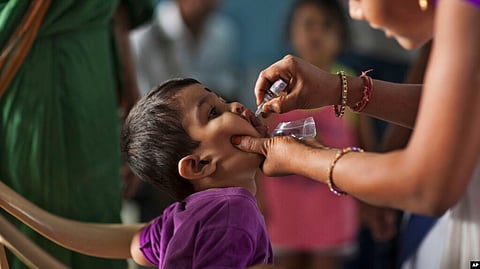
Under the stewardship of the WHO, which had anchored the global health system, the world has rid itself of ancient scourges like smallpox, leprosy and polio. It was possible because nations cooperated to follow global protocols like the oral polio vaccine programme. But now, scepticism in the US about vaccines—and science-based interventions in general—is undermining the unity of purpose upon which disease eradication depends. The containment of communicable diseases—and even rapidly communicated modern lifestyles—depends on globally consistent action. If polio is not rigidly controlled in the US, the effects will be felt in Africa and Asia.
The threat of nuclear warfare is back after decades. The India-Pakistan conflict earlier this year escalated and ended swiftly—to general relief, because persistent bad blood between the two nuclear powers in South Asia makes the region an ever-ticking flashpoint. But like many recent conflicts, including the missile duels in West Asia, it was from at a distance—rendering violence abstract, which may make the use of nuclear weapons more acceptable. The present nuclear arms regime, presided over by the US, remains patent only until first use. After that, it’ll be a free-for-all tournament.
As the US furls up its security umbrella, nations from Europe to Japan are again committing themselves to defence, and will form new blocs of military power. In our region, Pakistan has entered into a pact with Saudi Arabia, under which an attack on one will be seen as an attack on both. The US is revoking the sanctions waiver on Chabahar port. Nato nations are investing more in defence. And amazingly, Japan, the only victim of nuclear war, which had kept N-weapons at arm’s length, is doing an about-face.
In so many areas, change will be the only constant. But nations at the wavefront of change—the US, India, Russia, and China—are led by individuals nearing the end of their careers. Perhaps there will be stability after their political heirs establish a new normal—if systems of election and selection can retain the public trust till that time.
Pratik Kanjilal | SPEAKEASY | Senior Fellow, Henry J Leir Institute of Migration and Human Security, Fletcher School, Tufts University
(Views are personal)
(Tweets @pratik_k)