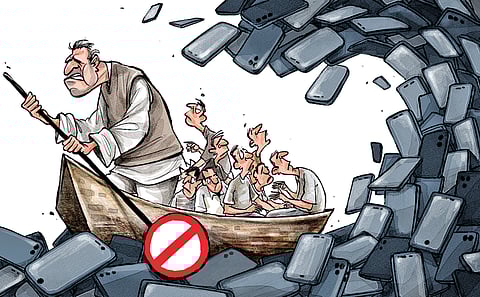

The online money gaming industry in India is in a tizzy. In the week gone by, the Promotion and Regulation of Online Gaming Bill 2025 was swiftly introduced and passed in both Houses of parliament.
It sure has been a tumultuous week for every gaming company that has been the talk of the town for the past several years. This high-visibility industry has grown leaps and bounds. While the 2025 numbers are awaited, the size of the industry in 2024 has been estimated to be ₹31,938 crore ($3.7 billion). The number for 2029 was estimated at ₹78,500 crore ($9.1 billion). The industry today speaks of an ecosystem of 2 lakh employees, a large number of companies, deep investments in online tech, a thriving ecosystem of influencers and a robustly-active advertising plan that ropes in both influencers and big stars from the realm of cricket and cinema to rope in new customers.
Dream11, just one of the 1900-plus companies around, hit it big while sponsoring the Indian cricket team jersey that can attract as many as 78 crore eyeballs—more than half the country’s population—at one go. Anyone who makes it to a cricket jersey in India is a big moneymaker brand with big ambitions. On the sly and superstitious side of the fence, any brand that has made it to the cricket jersey in recent times has had it hard. Sahara, Oppo, Byju’s and now Dream11 are all brands that soared high and, coincidentally, landed with a sudden thud. The Indian cricket jersey jinx is something to consider for sure.
Even as you consider the jinx, the gaming industry has most certainly seen it coming, but has possibly used every tool to postpone the inevitable for a while. This is an industry that grabbed the attention and involvement of more than 45 crore Indians who put their money into games that excited their interest and avarice.
The annual loss of the gamer is estimated to be ₹20,000-26,000 crore. The loss of the gamer is the gain of the gaming company. The industry believed in grabbing the largest number of eyeballs of potential customers. Cricket in general and the Indian Premier League in particular were great devices to garner eyeballs. The industry poured big money into cricket sponsorship and decided to spend money upfront to gain customers—ending up with 45 crore gamers.
The big losers in this ban on online money gaming (OMG) are the big companies that paid lopsided interest towards plucking the low-hanging fruit and did precious little for e-sports and casual games of skill. It was easier to get in those who wanted to play OMGs in a nation where gambling is illegal. Wagering is a passion for a lot of people who want to see the better life without putting in the hard work needed to get there.
But let’s be fair—it’s not laziness alone. There is the fact that you might want to put in that hard work, but the opportunities to absorb it don’t exist at all. Wagering is both a fun thing to do (look at the Diwali ‘teen-patti’ parties that are just about beginning) and a compulsive thing to do (look at gaming addiction) at times.
OMGs first drew the attention of the lowest wage-earning classes of society, who put in their meagre savings with the quest to make it rich. Your Ola cabdriver, your help at home, and the corner kirana-store guy probably wanted a piece of OMG action early and quick. Small winnings spurred a deeper involvement. In the beginning the money was yours. And then in came money that you made by selling things you did not want in the home. And then came the moneylender. The moneylender looking for opportunities got into the act. This informal lending sector has gotten a boost as well, thanks to OMG.
And when the debts started rising, the pressure on the losing gamer started building. Loans were taken to settle other ones. In the case of as many as 32 reported loss of lives due to suicide related to OMG (in the last 31 months), it was end-game. OMGs did not go after these lives. It was the moneylender and the rising debt profiles that were building up in the most susceptible parts of the economic food chain.
The government had to act, and it has done its job. Swiftly and without hesitation. The biggest loser in all of this is the government’s tax kitty. PM Narendra Modi has decided to take this sacrifice at the altar of saved lives. In a country where indebtedness in the informal sector is large, this act saves a large portion of the most susceptible classes from getting into a deeper quagmire. The toss-up was between revenue and safeguarding the country’s youth. The government has made the right choice.
Take a data nugget. At last count, India had 25.3 crore tobacco users. Consider a bulk of this to be addiction. As opposed to this, the OMG industry, as per government estimate, had 45 crore users. That’s nearly double the size of tobacco addiction, isn’t it? All in a short period of time.
Even as the debate between government over-reach and the necessity for this law continues, the OMG industry’s PR machinery will be in full play. The jobs and revenues lost will be cited. But what will not be cited is the misery of the masses. Only the immediate family members of the 32 lost lives will know the real misery brought onto many lives. This government action has given de-addiction a chance. Hopefully, only a smaller number of folks addicted to OMGs will continue playing through virtual private networks and overseas platforms.
One big thing is that it will stop advertising that was in the face. Some of our biggest brand endorsement stars have bitten into this greed without doing due diligence on the quiet havoc the sector created. Many are already sheepishly cleaning up the digital history of their endorsements. Thankfully, the law prohibits promotional advertising of OMGs too. Sadly, none of them had the bolder statutory warning: online money gaming is injurious to your wealth.
What’s next for the OMG companies? Time to promote real games. Time to focus on the globally big e-sports segment. Time to pivot the bandwidth of competence to the casual gaming sector as well. Out here, the relatively slower revenue streams will rest on the pillars of advertising and in-play purchases, but there is a business in building this revenue as well. It’s going to be a slow build, but there sure exists a big opportunity out here. You have a large database of 45 crore gamers in this country. Go for it. Responsibly.
Harish Bijoor | Brand guru & founder of Harish Bijoor Consults Inc
(Views are personal)
(harishbijoor@hotmail.com)