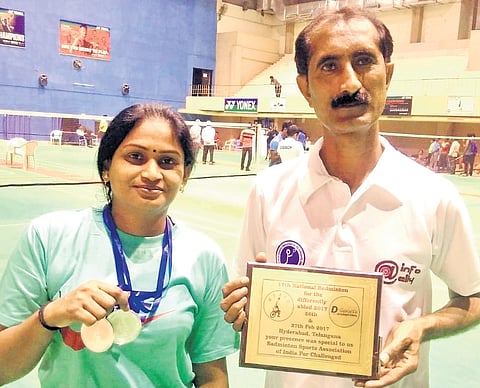

GUJARAT: From a cradle of pain to the crown of perseverance, this is the journey of Jagrutiben of Dholka in Ahmedabad district — a woman who rose from paralysis and poverty to power and purpose.
Struck by polio at six months, orphaned before she spoke her first word and burdened by hardship, she refused to yield. From threading cloth to throwing javelins, from selling sarees to sending her children abroad, she built her life stitch by stitch, throw by throw. Today, as a para-athlete, coach, entrepreneur and helper of the disabled, she stands tall — proof that destiny may cripple your legs but never your will. They say “adversity introduces a person to themselves”. For Jagruti, that introduction came before she learned to walk.
Born on March 2, 1977, she was just six months old when her fever turned fatal for her limbs. Polio paralysis struck, sealing her body in silence. And before her infant lips could call out “Ma”, fate took her mother away. The cradle that should have been her heaven became her battlefield. At seven months old, she lost her mother and grew up in the care of her maternal aunt, who became her world. Poverty hovered constantly, but her aunt’s affection became her shield.
“When life locks one door, destiny often hides the key within.” For her, that key was courage. With limited means but strong resolve, her aunt educated her till Class 9 and taught her one lesson — never bow, even when you break.
At 18, she married Dinesh, a humble diamond worker. Their small home soon filled with the laughter of their daughter, Amisha and son Vaibhav, but the struggle of empty pockets never left. When money ran out, she created her own opportunities. Sitting on the floor with a needle and thread, she started sewing.

“If the world won’t give you work, create your own,” she told herself. She turned her home into a workshop and later started her small venture, Jagruti Garment. From stitching kurtis and sarees to selling them herself, she built her independence.
But in 2018, another blow struck. Her husband fell critically ill. Hospital bills crossed Rs 1 lakh, and her daughter’s final-year fees demanded another Rs 40,000. She sold her wedding gold, but it wasn’t enough. Telling her daughter, “You’ll have to take a drop this year,” broke her. That night, despair overtook her and she nearly gave up, even attempting to end her life. Friends intervened, reminding her, “You can’t quit — you’ve survived too much to stop here.”
Amisha took a job in a mall; Vaibhav worked odd hours. The family that once cried together now fought together. Slowly, things changed. Amisha graduated and went to Australia for higher studies. Vaibhav completed Chemical Engineering from Nirma University and secured an MNC job.
As her children rose, Jagrutiben found her own rebirth in sports. Through Apang Manav Seva Sanstha, she met athletes who were disabled in body but undefeated in mind. In 2013, at C N School grounds in Ahmedabad, she gripped a javelin. Her hands trembled with purpose. Her first throw won her first place in javelin and discus — a turning point that pierced years of fear.
Coach Ranjitbhai Gohel, a pillar of Divyang sports, shaped her determination into athletic ability. With his guidance and support from Apang Manav Seva, she represented Gujarat at state and national-level Paralympics, competing across Nadiad, Vadodara, Anand, Chandigarh, Delhi, Nepal, Malaysia, Sri Lanka and the Maldives.
Medal by medal, she earned Rs 1.5 lakh in government rewards and numerous trophies in javelin throw, discus and sitting volleyball. For the last five years, she has coached women’s sitting volleyball, helping shape new athletes.
Now, with her children settled, she works with the disabled community, offering financial support, moral support, and motivation. “I know their pain,” she says softly, “because I’ve lived it.”
Her journey stands as proof that disability may bend your body, but not your destiny. She stitched her own fate with courage, threw her pain into the air like a javelin, and turned every wound into a weapon. From a motherless infant in Dholka to a medal-winning athlete and mentor, her story shines bright — the very meaning of the saying: “When fate burns your wings, you learn to fly through fire.”