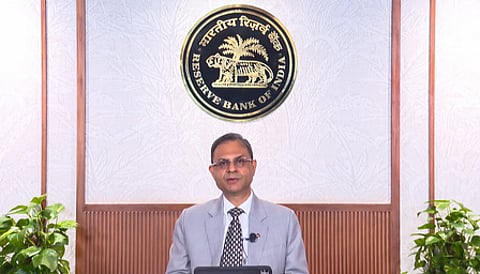

CHENNAI: The Reserve Bank of India delivered a widely anticipated policy shift today, with the Monetary Policy Committee unanimously cutting the repo rate by 25 basis points and maintaining a neutral stance. The benchmark rate now stands at 5.25 percent, marking a cumulative reduction of 125 basis points through 2025.
The decision came against the backdrop of exceptionally soft inflation and stronger-than-expected economic momentum. Retail inflation had eased to historic lows in recent months, giving the central bank enough room to support demand without threatening price stability. At the same time, the economy continued to perform well, with second-quarter GDP growth posting an impressive 8.2 percent expansion, prompting upward revisions to full-year growth forecasts.
RBI’s decision signals its confidence in the economy’s resilience and its view that a moderate dose of monetary easing can help sustain the ongoing recovery. The neutral stance underlines the committee’s intent to keep all options open for future meetings, avoiding any commitment to a prolonged easing cycle. While the rate cut is expected to provide relief to borrowers, its actual impact hinges on how swiftly banks transmit the lower policy rate into lending rates. Home, auto and personal loan borrowers stand to benefit the most, as banks are likely to adjust their external benchmark–linked loan rates in the coming weeks. On the other hand, depositors may face another round of declining fixed deposit returns as banks recalibrate their cost of funds, making this a potentially narrow window for savers to lock in higher rates.
The overall macroeconomic implications of the move are mixed but broadly supportive of growth. Cheaper credit may lift consumption in rate-sensitive sectors and encourage fresh corporate borrowing, potentially accelerating investment in the coming quarters. However, the combination of strong domestic demand and already rapid economic expansion raises the possibility of inflationary pressures resurfacing if consumption gathers too much pace. The RBI’s neutral stance is a recognition of this delicate balance, allowing the central bank to respond quickly should inflation show signs of reversing its downward trend. The currency and external sector also remain important variables, especially given recent bouts of volatility in global markets.
Looking ahead, most economists expect the central bank to pause for a period as it assesses how today’s cut works through the financial system. With inflation currently well contained but growth firing on all cylinders, the RBI is unlikely to move aggressively in either direction unless conditions shift materially. For now, the policy signals continuity, caution and calibrated support for the economy, with the central bank aiming to preserve stability while sustaining the growth cycle into 2026.