
In a continued attempt to re-assert its relevance in global energy markets, the US once more expended ammunition at Russian oil majors Rosneft and Lukoil. The sanctioned companies are being dislodged from the US banking system starting November 21. Markets are being cautiously apprehensive as prices are firming up. However, informal estimates predict a movement in narrow band despite the imminent initial decrease in Russian oil flow.
Sanctions, a contentious issue, facilitate the resurrection of alternatives like the Russian ‘shadow fleet’. Moscow-based Transneft, the largest oil pipeline company with more than 70,000 km of network, handles 80 percent of pipeline supplies of Russian crude; it remains a major facilitator of oil exports to China, Finland, Germany and a few east European consumers. Embargoes often act as catalysts for surrogate corporate entities that circumvent restrictions and facilitate covert trade.
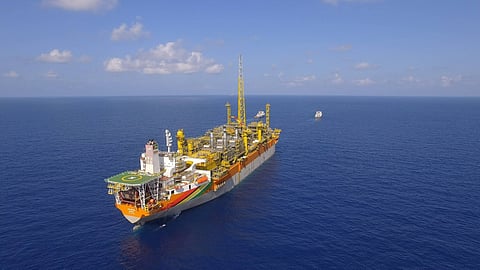
Meanwhile, fears of supply constraints are allayed with considerable OPEC capacity in abeyance. The Latin American flows are expected to surge in 2026. Stabroek Block, a massive field off Guyana’s shore operated by ExxonMobil and partners, is expected to report substantially higher production. Petrobras resumed production at the Tupi field while clocking record levels at Búzios, two of the most prolific pre-salt offshore assets in Brazil that are slated to place the country among the top five oil producers. With rising oil sands production in Canada and sustained shale activity in the Permian Basin, production will significantly increase in the next two years.
Prior to 2022, Russian crude constituted barely 2 percent of India’s import basket, but touched 37 percent later on the back of discounts and favourable trade terms. China remained the largest buyer of Urals. However, energised Saudi ties with India and China helped Riyadh’s share in India’s imports to remain robust, and its exports to China hit a two-year high this August at 1.65 million barrels per day, a figure that could be re-visited soon.
Aramco’s recent offer of price cuts for Asia is evident of the kingdom’s intent to corner a larger share of the regional demand. Mindful of the trade initiations with US and burgeoning supply sources over the last couple of years, the dependency on Moscow is easier to taper. This column had earlier mentioned America’s keenness to raise its share in the Asian markets, pre-dominantly India. The latest import figures corroborate it.
Buyers often consider energy security synonymous with economic security, a euphemism for bargain pricing. Though this time, it may be tough to ensure both; a steep rise seems a distinct improbability.
While the markets decipher the financial implications of latest moves, a different scenario is unfolding in the background. As American efforts remain focused on strangling Moscow’s financial resources in a bid to end the Ukraine war, a flashback to 2022 reveals a different narrative.
Russia, the third largest producer of oil, holds a vast incentive for exploration and production. The ageing infrastructure and obsolete technology needs fresh infusion. Downstream capacity and product mix warrant substantial upgrading. Donald Trump is reluctant to “fully arm” Kyiv with Tomahawk missiles, capable of inflicting damage on Russia’s depleting refinery capacity. Their use could invoke retaliation that would derail hopes of any ‘collaboration and economic alignment’ between Russia and America.
Exxon quit Russia abruptly in 2022 in the wake of Ukraine war, leaving behind massive stranded assets including at Sakhalin-1, the large, foreign-funded oil-and-gas project with Chinese and Indian equity participation. The American oil major is currently engaged in a protracted litigation seeking compensation of $4.6 billion from the Russian authorities. Vladimir Putin recently signed a decree allowing Exxon to return to the project. At the Alaska Summit, he had suggested US cooperation for energy exploration in the Arctic. Oil majors seek cost-effective and guaranteed high-return opportunities as the conventional sources begin to exhaust. The geopolitics of the region could dramatically alter the US’s oil dynamics.
Given the sensitivity of oil economics for Beijing, despite its close energy ties with Moscow and Tehran, oil was not on the agenda as Trump and Xi Jinping met recently at Busan in South Korea. Was it selective laissez-faire or a long shot at veiled diplomacy?
The Trump-Putin détente at Budapest—a venue symbolising Hungary and Slovakia’s continued dependence on Russian oil via the Druzhba pipeline—failed to materialise due to a political and strategic impasse. Berlin was accorded an exemption from the latest US sanctions for Rosneft’s three Germany-based refineries. The relief comes in an aptly denoted ‘Letter of Comfort’ from the US government. In the present atmosphere of contradictions and vested interests, it is futile to focus on the price and availability.
In The Apprentice’s first season that aired in January 2004, the opening lines by a younger Trump, comfortably seated in a limo, speaks of his accomplishments but draws on his brush with heavy debt: “I fought back and I won… I used my negotiating skills… I worked it all out and I am having more fun than I ever had.” These words, despite the present maze of confusion that prevails with his directives and rhetoric, kindle hopes for a finer realpolitik that’s a global requisite. The world is eagerly waiting to see how much of reel life merges with the real.
Ranjan Tandon | Senior markets specialist and author
(Views are personal)