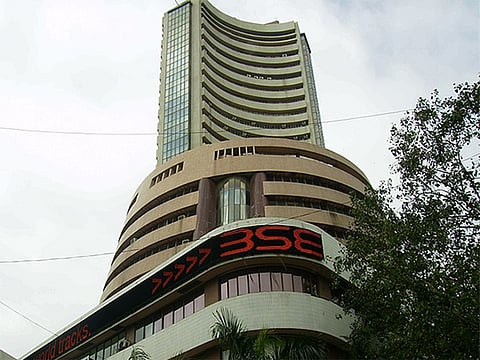

Equity market benchmark indices, BSE Sensex and NSE Nifty, which opened cautiously amid mixed global cues, gained momentum following the Reserve Bank of India’s decision to cut the repo rate by 25 basis points to 5.25%. The Sensex closed at 85,712.37, up 447.05 points or 0.52%, while the Nifty50 settled at 26,186.45, up 152.7 points or 0.59%.
"Indian markets have enthusiastically responded to the RBI's unexpected 25 bps rate cut, a move that seemed unlikely given the strong Q2 GDP data. This surprise, combined with sharply lower inflation forecasts and supportive liquidity measures, has triggered a risk-on sentiment across equities,” said Vinod Nair, Head of Research, Geojit Investments Limited.
Rate-sensitive sectors such as autos, real estate, and NBFCs led the gains due to a reduction in borrowing costs. Private banks also gained on the expectation of treasury profits but concerns around net interest margins (NIM) limited their upside. On the sectoral front, Nifty PSU Bank and Nifty Financial Services emerged as the top two sectoral gainers.
As many as 38 stocks ended in the green in the Nifty50 universe with Shriram Finance (up 3.04%), SBI (up 2.49%), and Bajaj Finserv (up 2.13%) emerging as top gainers.
“Overall, the short-term outlook remains cautiously positive, with a focus on strong corporate earnings in December. However, near-term risks such as a widening current account deficit and global trade tensions continue to pose challenges. The stance of the US Fed on rate cuts will be crucial for maintaining the domestic trend for the month,” added Nair.
The market also got a boost from the RBI’s announcement that it will conduct Open Market Operation (OMO) purchases of government securities worth Rs 1 lakh crore and $5 billion buy/sell swap of three-year to infuse durable liquidity.
Pranay Aggarwal, Director and CEO of Stoxkart, said that from a market perspective, participants typically look for clarity on liquidity management and interest-rate trajectory. The announced OMO plan may help ease yield pressures and support broader market sentiment by strengthening liquidity conditions.
“We believe investors should continue to focus on disciplined asset allocation, risk management, and long-term goals rather than short-term market movements around policy events,” stated Aggarwal.
Bharat Dhawan, Managing Partner, Forvis Mazars in India, said that the commitment to large-scale OMO purchases is particularly significant as it provides banks with greater liquidity assurance, supports smoother transmission of the rate cut and is aimed at lowering funding costs across the financial system.
“For businesses and consumers, this combination of rate action and liquidity injection should meaningfully improve access to credit and revive momentum in segments where lending had slowed. With inflation falling sharply from nearly 8% to close to 2%, and the FY26 growth forecast revised upward from 6% to 7.3%, the RBI is capitalising on a favourable macroeconomic backdrop to stimulate domestic demand,” added Dhawan.
Swapnil Aggarwal, Director, VSRK Capital, said that the RBI’s 25 basis points rate cut reflects a cautious step towards supporting the country’s growth. While the policy easing signals that the rate-cut cycle has begun, it also serves as a reminder that the central bank moves gradually, even though markets respond instantly.
“This easing cycle has already started influencing investor behaviour, particularly in interest-sensitive segments of the market. For investors, the move calls for a rethink of yield expectations and portfolio balance as lower rates may compress returns on fixed-income instruments and create shifts towards market-linked investments. Overall, this decision marks the beginning of a new phase in monetary policy and reinforces the importance of aligning investment strategies with a changing rate environment. The impact may be gradual in policy terms, but reactions in markets tend to be swift,” added Aggarwal.