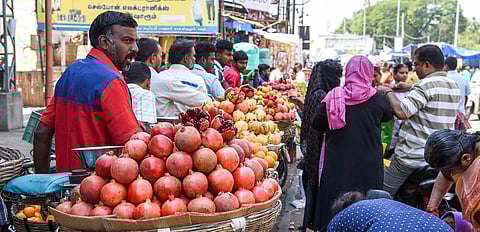

When we speak of successful government initiatives of the past decade, popular missions like the Swachh Bharat Mission (SBM) usually dominates the conversation. Yet, quietly, another programme has been impacting the lives of the millions of India’s urban street vendors, who sustain the everyday economy of Indian cities. That initiative is PMSVANidhi— the Prime Minister Street Vendor’s AtmaNirbhar Nidhi, launched in June 2020 amid the COVID-19 lockdown. Conceived as an immediate relief measure for one of the hardest-hit groups during the pandemic, it has evolved into something far more enduring — a social innovation that has played a transformative role in supporting this dynamic sector and has important lessons for policies on how to address larger issues of urban poverty and livelihood promotion.
The Context
The pandemic devastated India’s millions of street vendors—the economic lifeline of urban India. Besides the services and goods that vendors provide to the city consumers, vending also provides low-paying yet steady livelihoods for migrants and the urban poor, as well as ensuring affordable access to food and essentials for the urban poor. These are also the original ‘green’ enterprises, with far lower emissions than brick-and-mortar shops. Lockdowns wiped out their incomes, and lack of formal recognition excluded them from most relief measures. A WIEGO study in Delhi found that most street vendors couldn’t work in April 2020, with their earnings dropping by nearly 90%. Another study showed that many women vendors lost their livelihoods and faced severe income declines.
In response, the government took an unusual step. Instead of one-time relief grants, it launched a programme to rebuild livelihoods through collateral-free microcredit of Rs 10,000 as working capital for street vendors. Subsequent tranches rewarded timely repayment, with interest subsidies and digital cashback incentives making it nearly zero interest. This was more than a crisis response—it marked a fundamental policy shift. Street vendors were reimagined not as welfare recipients but as micro-entrepreneurs needing capital, recognition, and digital inclusion. Once seen as unbankable, they were nudged into formal finance. As it evolved, PM-SVANidhi integrated credit, digital payments, and municipal engagement—transforming relief into recognition, with remarkable results.
As of October 2025, over 97 lakh loans worth over Rs 14,000 crore have been disbursed, and nearly 47 lakh vendors are digitally active, using UPI for daily transactions. The scheme’s digital backbone, linking urban local bodies, banks, strong street vendors federations made this scale possible. Encouraged by its success, the government has extended PM-SVANidhi till 2030, expanding loan limits and adding RuPay-linked credit cards, trainings and new digital incentives.
The Social – Policy Innovations of the Scheme
A simple yet powerful innovation early into the scheme was the Letter of Recommendation (LoR), which enabled unregistered vendors to be formally recognised by local bodies and brought into the fold of formal finance. The scheme’s decentralised design, implemented through Urban Local Bodies (ULBs), ensured flexibility and local ownership, replacing a top-down rollout with participatory governance.
Equally significant was PM-SVANidhi’s use of behavioural incentives rather than compulsion. Instead of mandating digital adoption, the scheme used cashback rewards and better credit terms to nudge vendors toward digital transactions. For the first time, millions of vendors also developed digital and financial footprints forming an invaluable inclusion infrastructure for future welfare programmes.
Another distinguishing feature is the policy’s agility. Later into the implementation, PM-SVANidhi evolved from a credit scheme into a platform for broadening social security of workers. Under ‘SVANidhi se Samriddhi’, linking vendors and even their families to welfare benefits, thereby broadening the impact of the scheme.
The public engagement with vendors, albeit per functionary, in the implementation of the scheme, and its subsequent upgradation also lent legitimacy and dignity to a community long stigmatised as encroachers, reframing them as essential urban entrepreneurs.
Together, these elements — integration, decentralisation, behavioural design, and adaptability — make PM-SVANidhi a landmark in social innovation within governance. Unlike other missions, its success is not marked by new infrastructure or project inaugurations, but by everyday lives of vendors — the chai vendor now accepting UPI payments, or the street vendor proudly displaying the PM-SVANidhi certificate with the Prime Minister’s photo.
The Future Lessons and Possibilities
PM-SVANidhi stands out as one of India’s most quietly transformative policy innovations. It turned a crisis into an opportunity to redesign the relationship between the state and the informal economy. Its core innovation lies in the integration of financial, digital, and municipal governance. As the scheme enters its next phase, the challenge is to move from credit to ‘credit plus’, to further support to street vendors for long term economic resilience.
Many vendors remain excluded as they are not registered with ULBs, especially the more marginalised and women vendors. Simplifying registration, incentivising women’s enrolment, partnering with local federations, and ensuring gender inclusion must be priorities. A dedicated sub-component within PM-SVANidhi could focus on women vendors—enhancing credit access, inclusion, and social protection through SHG linkages and training for economic empowerment and leadership.
Credit must also be accompanied by financial literacy trainings. PMSVANidhi must safeguard against over-indebtedness, ensure flexible repayment schedules, emergency funds, and protection from unintended harms such as IT notices or CIBIL downgrades. The scheme also holds potential for collective and cooperative models, were vendors pool larger loans for shared assets like vending zones, amenities such as cold storage or logistics facilities, multiplying impact.
PMSVANidhi should guide MoHUA in planning vending zones and infrastructure, as street vending remains insecure without them. Formalisation of vending zones must be incentivised at the city level, and financial inclusion matched with institutional protection and vendor-led grievance systems. The scheme can also leverage its platform to facilitate implementation of the SV Act 2014 by training and capacitating TVCs to play a stronger role in its execution.
Finally, most importantly, as climate change increasingly disrupts urban livelihoods, PMSVANidhi must evolve to address climate distress that has financial implications. Heatwaves, heavy rains, and extreme weather threaten vendors, and integrating adaptation measures through co-financing climate resilient infrastructure such as shade, water and sanitation, safety nets such as heat insurance and emergency support as well as promoting zero-carbon practices that can make the scheme as a hallmark of urban climate resilience.
Conclusion
The lessons of PMSVANidhi reach far beyond street vending, offering a replicable model for other informal sectors like waste pickers, domestic workers, and delivery workers—where credit, support, and recognition are most needed. For India’s 40 crore informal workers, finance, recognition, and infrastructure remain missing links in inclusive urbanisation. PMSVANidhi doesn’t and cannot fix all inequities but opens a vital policy imagination that sees informality not as a problem to eliminate but as a system to strengthen. As India faces climate and livelihood challenges, its model points to a more resilient, inclusive urban future.
(The authors; Aravind Unni is an urban practitioner and researcher working on informality, livelihoods, and inclusive urban planning in Indian cities, and Shalini Sinha is Asia Strategic Lead, Urban Policies Programme, WIEGO, focusing on informal workers, gender, and inclusive urban policies across Asia. The views are personal)